Overtraining vs Undertraining: How to Find the Sweet Spot Where You Actually Progress
There are two ways to stall your progress: doing too much (overtraining, no recovery) and doing too little (undertraining, no stimulus). The sweet spot in between — enough stress, enough recovery — is where you actually progress. The overtraining guide: the two ditches, how to find the sweet spot and how to read your signals.

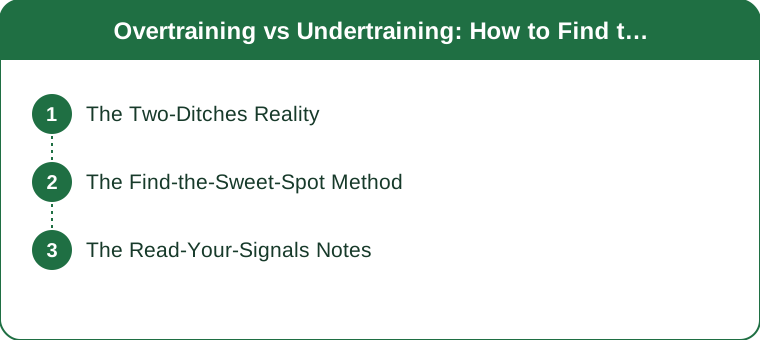
The Two-Ditches Reality
The two ways to stall progress: the overtraining-too-much (the overtraining (too-much, no-recovery) stalling progress from the overtraining-signs chapter — the the-overtraining; the too-much), the undertraining-too-little (the undertraining (too-little stimulus) stalling progress too from the how-much-recovery-do-you-need chapter — the the-undertraining; the too-little), the the-sweet-spot-between (the the-sweet-spot of enough-stress-and-recovery from the how-much-recovery-do-you-need chapter — the the-sweet-spot; the the-balance), the the-progress-happens-in-the-middle (the progress in the balanced-middle from the recovery-week chapter — the the-progress; the the-middle), and the reframe (the training as a two-ditches (over-and-under) problem where the sweet-spot progresses).

The Find-the-Sweet-Spot Method
Finding the training sweet spot: the the-progressive-overload (the enough-stimulus via progressive-overload from the how-much-recovery-do-you-need chapter — the the-stimulus; the enough-stress), the the-adequate-recovery (the enough recovery between sessions from the how-much-recovery-do-you-need chapter — the the-recovery; the enough-rest), the the-balance-stress-and-recovery (the balancing training-stress and recovery from the training-stress-life-stress chapter — the the-balance; the stress-and-recovery), the the-recovery-weeks (the recovery/deload weeks periodically from the recovery-week chapter — the the-deload; the recovery-weeks), the the-account-for-life-stress (the life-stress counting toward total-stress from the training-stress-life-stress chapter — the the-life-stress; the life-counts), the the-consistency-not-max (the consistent-appropriate over max-effort from the recovery-week chapter — the the-consistency; the sustainable), the the-listen-and-adjust (the adjusting to how-you-recover from the how-much-recovery-do-you-need chapter — the the-adjust; the responsive), and the the-individual (the the-sweet-spot being individual from the how-much-recovery-do-you-need chapter — the the-individual; the your-balance).
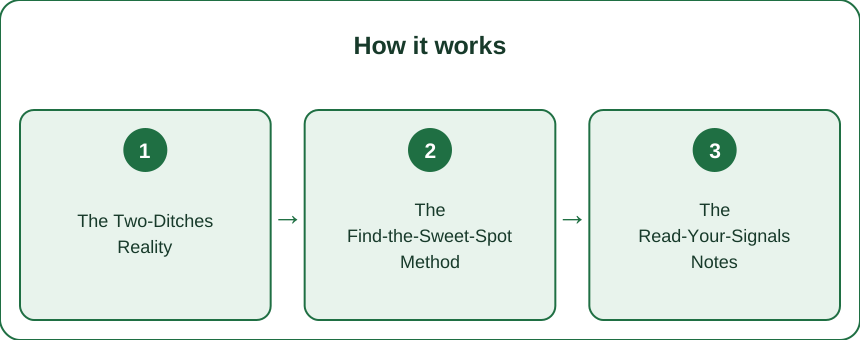
The Read-Your-Signals Notes
Reading your body’s signals: the the-overtraining-signs (the overtraining signs (fatigue, poor-performance, mood) from the overtraining-signs chapter — the the-over-signs; the too-much-signs), the the-undertraining-signs (the no-progress signaling under-stimulus from the how-much-recovery-do-you-need chapter — the the-under-signs; the too-little-signs), the the-recovery-quality (the sleep-and-recovery quality from the how-much-recovery-do-you-need chapter — the the-recovery; the recover-well), the the-life-stress-check (the total life-stress affecting recovery from the training-stress-life-stress chapter — the the-life-stress; the check-life), the the-adjust-accordingly (the adjusting training to your-signals from the how-much-recovery-do-you-need chapter — the the-adjust; the respond), the the-deload-when-needed (the deloading when signals show over-reaching from the recovery-week chapter — the the-deload; the back-off-when-needed), the the-progress-as-the-goal (the sustainable-progress as the aim from the recovery-week chapter — the the-progress; the the-goal), and the frame (training-sweet-spot as enough-stimulus-and-recovery balancing over-and-under, read-via-signals-and-adjusted — where you actually progress. Find the sweet spot between too-much (overtraining) and too-little (undertraining) — enough stimulus via progressive overload, plus adequate recovery, deload weeks, and accounting for life stress — read your signals (overtraining fatigue vs no-progress) and adjust: the balance where you actually progress.
There are two ways to stall your progress: doing too much (overtraining, no recovery) and doing too little (undertraining, no stimulus). The sweet spot in between — enough stress, enough recovery — is where you actually progress. Find it — enough stimulus via progressive overload, adequate recovery between sessions, periodic deload weeks, accounting for life stress (it counts toward total stress), and consistency over max-effort. Read your signals — overtraining signs (fatigue, poor performance, mood) vs undertraining (no progress) — and adjust, deloading when needed. The balance where you actually progress.
Keep Reading
This article is for general informational purposes only and is not medical advice. Always consult a qualified health professional for guidance specific to you.