The Overtraining Signs: When Rest Is the Workout
Fitness culture celebrates more — more sessions, more intensity, no days off — while quietly producing the opposite of fitness: the plateaued, exhausted, always-sore exerciser who’s training hard and going backwards. The overtraining guide: the signs, the science and the reset.

The Spectrum
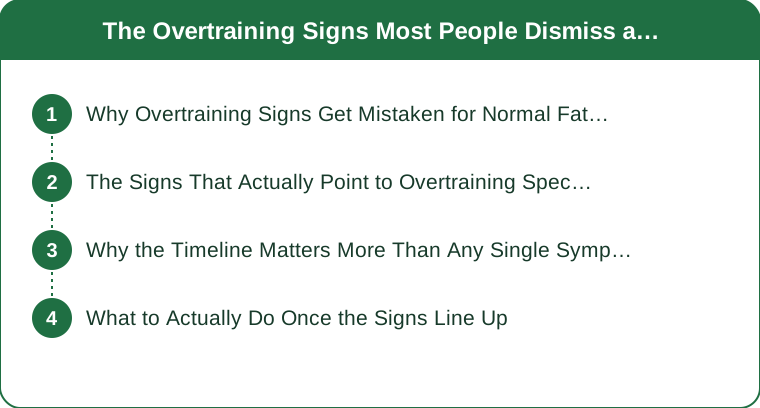
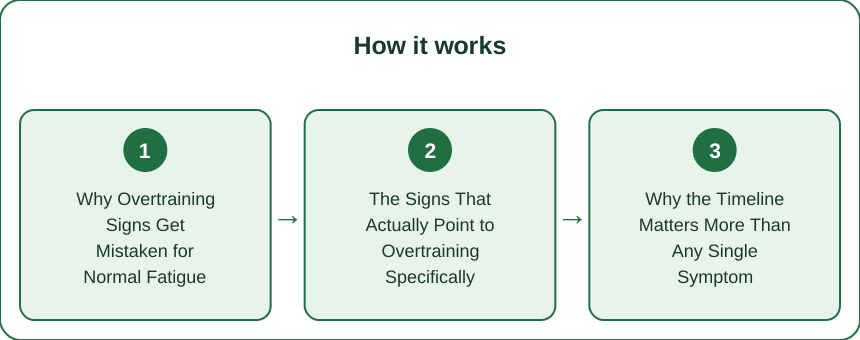
The terminology that matters: functional overreaching (the deliberate hard block followed by recovery and a fitness bump — training working as designed), non-functional overreaching (weeks of accumulated fatigue with stalling performance — the common zone where enthusiastic exercisers live too long), and true overtraining syndrome (months-deep, medically significant, mercifully rare). The practical takeaway: most ‘overtraining’ worry is really under-RECOVERING — the training load isn’t the problem; the missing sleep, food and easy days are. Same fix either way: recovery first.
The Warning Signs
The signal cluster worth tracking: performance decline despite effort (the same weights feeling heavier for two-plus weeks — the most objective flag), resting heart rate drifting up (the morning-pulse or wearable trend — a classic early marker), sleep degrading paradoxically (tired-but-wired nights after hard training — the nervous system stuck in gear), mood and motivation souring (dread before sessions that used to excite — the psychological markers often arrive FIRST in the research), the immunity dip (the third cold this season is data), and the everything-hurts baseline (DOMS that never clears — the repeated-bout effect working in reverse). One sign is noise; three or four trending together is the pattern.

The Reset Protocol
The recovery-first fix: the deload week as first response (volume halved, intensity gentled, movement maintained — the easing that usually resolves non-functional overreaching within one-to-two weeks), the fundamentals audit while deloading (sleep extended, protein and total food honest — under-eating plus hard training is the classic hidden driver, especially in women; the RED-S conversation lives here and deserves professional eyes if cycles or energy have gone strange), the easy-movement prescription (walks, the yoga-nidra and breathwork tiers — recovery is active, not just absent), and the rebuild rule (return at 70%, ramp over two weeks, and schedule the deloads PROACTIVELY thereafter — every fourth-ish week easing is how the fittest people never meet this article again).
The Culture Correction
The mindset repair: rest days are training days (adaptation HAPPENS in recovery — the workout writes the request; the rest fills the order; skipping rest is skipping results), more is a strategy not an identity (the no-days-off badge measures attendance, not progress — the progress measures progress), the data-with-perspective clause (wearable recovery scores are useful trends and terrible masters — the how-do-I-actually-feel check outranks the app), and the seasonal wisdom (training lives in waves — build seasons, maintain seasons, rest seasons; the year-round redline is nobody’s plan). The strongest training decision most over-trainers ever make is the week off they didn’t want — and the PRs that follow it make the argument permanently.
Three signs trending is the pattern, deload first, eat and sleep the fix, schedule rest proactively. Overtraining is under-recovering in disguise — and rest, deployed on purpose, is the workout that unlocks the rest.
Keep Reading
This article is for general informational purposes only and is not medical advice. Always consult a qualified health professional for guidance specific to you.