Why Overtraining Shows Up as Afternoon Sugar Cravings First
Quick Answer: A sudden, specific craving for fast carbohydrate in the mid to late afternoon is one of the earliest signals that training load has outrun recovery and fuelling. It appears because liver and muscle glycogen are not being fully restored between sessions, and the body preferentially requests the fuel it is short of rather than food in general. It typically shows up before resting heart rate changes and well before performance drops, which makes it useful. The first thing to check is not your training volume but whether you are eating enough carbohydrate around your sessions.
You have never been someone who craves sugar. Then, four weeks into a harder training block, you find yourself standing in front of the cupboard at 3pm looking for something specific and sweet.
Most people file this as a willpower issue. It is far more likely to be an early data point, and it is worth reading properly.

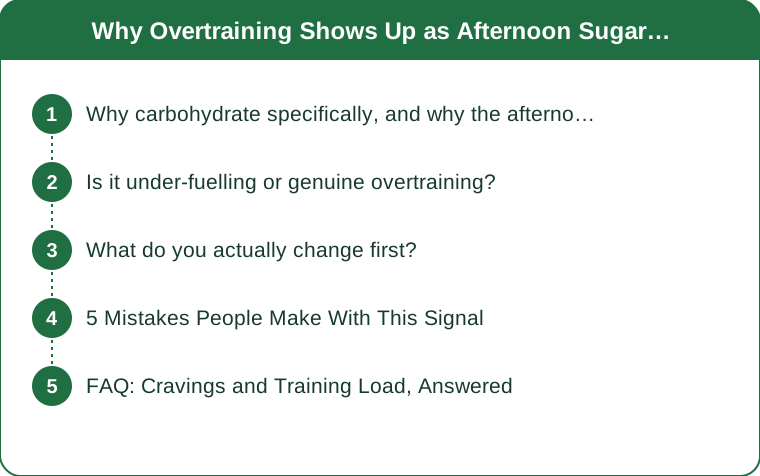
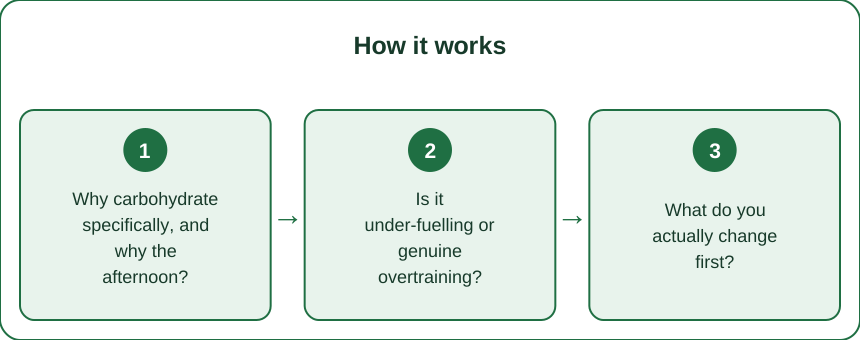
Why carbohydrate specifically, and why the afternoon?
Because the shortage is specific and the timing follows your liver, not your schedule.
Glycogen is stored in two places and drained differently. Muscle glycogen fuels the working muscle and is replenished over roughly 24 hours with adequate carbohydrate intake. Liver glycogen maintains blood glucose for the brain and other tissues, is much smaller, and depletes overnight and across the day.
Incomplete restoration compounds. If a session drains glycogen and the following day’s intake does not fully replace it, you start the next session slightly lower. Repeat across a training block and the deficit accumulates, which is the mechanism behind a great deal of what people label overtraining but is more accurately under-recovery from under-fuelling.
Low liver glycogen produces a specific appetite. The signal is not generalised hunger. It is a preference for rapidly available carbohydrate, which is why the craving is for something sweet rather than for a meal.
The afternoon timing is not a coincidence. By mid afternoon you are typically several hours past lunch, past a morning session in many cases, and at the point where liver glycogen has been drawn down. This is also when cortisol is falling from its morning peak, and the combination is why 3pm is the reliable hour.
Why this signal precedes the others. Fuel status changes within days. Resting heart rate and HRV changes reflect accumulated autonomic disturbance and take longer. Performance drops last, because you can maintain output through effort for a surprisingly long time.
Is it under-fuelling or genuine overtraining?
They look identical from the outside and the fixes are opposite, which is why this distinction matters more than any other in this topic.
Under-fuelling means the training load is appropriate and the intake is not. The fix is more food, primarily more carbohydrate, and specifically around sessions. Training volume stays the same.
Genuine overreaching means the load itself has outrun your capacity to adapt, even with adequate fuel. The fix is reduced load. Eating more will not resolve it.
Signals that point toward under-fuelling:
- The craving is specifically for carbohydrate rather than for food generally
- You feel fine during the first part of sessions and fall off a cliff in the last third
- You are cold, particularly hands and feet, more than usual
- Sleep is disturbed in the early morning hours, which is a classic low-fuel pattern
- Appetite is high rather than suppressed
Signals that point toward genuine overreaching:
- Appetite is suppressed rather than elevated, which this blog has covered separately
- Motivation has dropped before performance did
- Resting heart rate has crept up over a week or more
- You feel clumsy or uncoordinated in the warm-up
- Sleep is poor in the sense of not falling asleep, rather than waking early
The overlap case is the common one. Many people are both slightly under-fuelled and slightly overreached, because under-fuelling reduces the load you can tolerate. The practical rule is to fix the fuelling first for two weeks, because it is faster, lower cost, and if it resolves the problem you never needed to cut training.
A serious note. Persistent low energy availability has genuine health consequences including effects on bone density, menstrual function, and hormonal health. If cravings come alongside menstrual changes, frequent illness, or stress fractures, that is a conversation with a doctor rather than an adjustment to your snacks. This is general information, not medical advice.

What do you actually change first?
Timing and placement of carbohydrate, before total amount.
Put carbohydrate around the session. The two highest-leverage placements are the two to three hours before training and the two hours after. Most people who report this craving have adequate total intake distributed badly, with most carbohydrate at dinner and almost none near their sessions.
Eat something within an hour of finishing. Glycogen resynthesis is fastest in the first hours after exercise. A meal or a substantial snack with both carbohydrate and protein in that window does more for next-day fuel status than the same food eaten at 8pm.
Do not train fasted during a hard block. Fasted morning training has legitimate uses. During a period when you already suspect a fuel deficit, it deepens the problem and reliably worsens the afternoon craving.
Add a deliberate mid-afternoon carbohydrate snack. Preempting the craving with something planned at 2:30 is more effective than resisting it at 3:15. This sounds like a concession and it is a fuelling strategy.
Check whether the craving disappears. Give it ten to fourteen days. If the 3pm craving resolves and training feels better, the diagnosis was under-fuelling and no load change is needed. If it persists with genuinely adequate intake, then reduce load, and this blog’s recovery week material applies.
What not to do. Do not respond to a fuel shortage by cutting carbohydrate further, which is a common instinct when the craving feels like a discipline failure. That converts a fixable fuelling issue into a genuine overtraining state within a few weeks.
5 Mistakes People Make With This Signal
1. Treating it as a character flaw. The craving is information. Suppressing it successfully for three weeks does not remove the deficit, it just removes your best early warning and lets the problem develop into something that costs you a training block.
2. Reaching for caffeine instead. Caffeine blunts appetite for a couple of hours and then interferes with sleep, and poor sleep both raises appetite the next day and reduces recovery. It converts one problem into two, and it is the most common response to a 3pm slump.
3. Assuming more protein will fix it. Protein is important for recovery and it is not what a glycogen-depleted system is asking for. Adding protein while keeping carbohydrate low often leaves the craving completely unchanged, which people then find confusing.
4. Checking only the wearable. Recovery scores and HRV are lagging indicators for this specific problem, and this blog has written about why they can say you are fine when you are not. Fuel status changes faster than autonomic markers do.
5. Cutting training immediately. If the cause is under-fuelling, cutting training resolves the symptom while confirming the wrong diagnosis, and the problem returns as soon as load goes back up. Fix fuelling first and only cut load if the craving survives two weeks of adequate intake.
FAQ: Cravings and Training Load, Answered
Why do I crave sugar specifically rather than food in general?
Because low liver glycogen produces a request for rapidly available carbohydrate rather than for calories generally. It is a targeted signal, which is exactly what makes it a useful early indicator of incomplete refuelling between sessions.
Is craving sugar a sign of overtraining or of not eating enough?
Most often not eating enough, particularly not enough carbohydrate near your sessions. Genuine overreaching more typically suppresses appetite. Fix the fuelling for two weeks first, because it is faster and lower cost than cutting training.
Should I just give in to the craving?
Better than that, preempt it with a planned carbohydrate snack in the early afternoon. Responding to a fuel signal with fuel is not a lapse. Repeatedly overriding it is what turns a fixable problem into a lost training block.
TL;DR:
- A new, specific afternoon craving for fast carbohydrate is often the earliest sign that fuelling has fallen behind training.
- It comes from incomplete glycogen restoration, and it appears before resting heart rate rises or performance drops.
- Elevated appetite points toward under-fuelling; suppressed appetite points toward genuine overreaching. The fixes are opposite.
- Move carbohydrate to around your sessions, eat within an hour of finishing, and reassess after two weeks before cutting any training.
If 3pm has changed and nothing else has, look at what you ate before and after yesterday’s session first.
Keep Reading
This article is for general informational purposes only and is not medical advice. Always consult a qualified health professional for guidance specific to you.