Why a Planned Recovery Week Can Feel Worse for the First Few Days Before It Feels Better
A planned recovery week can feel counterintuitively worse for the first few days, with more fatigue and stiffness rather than less, and that dip isn’t a sign the recovery week is failing — it’s often a sign that hard training had been quietly masking a fatigue level that’s only now becoming visible.

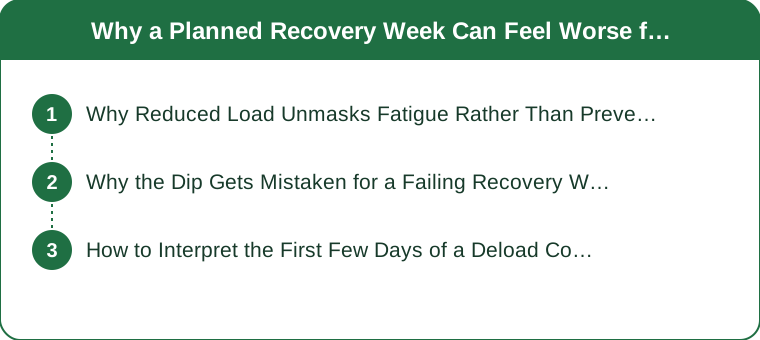
Why Reduced Load Unmasks Fatigue Rather Than Prevents It
The mechanism: the-adrenaline-and-focus-that-accompany-hard-training-sessions-partially-mask-accumulated-fatigue-in-the-moment-and-that-masking-effect-disappears-as-soon-as-training-intensity-drops (the adrenaline, focus, and momentum that accompany hard training sessions partially masking a person’s actual accumulated fatigue level in the moment, and that specific masking effect disappearing almost immediately once training intensity drops for a deload, per the how-much-recovery-do-you-need-guide logic — the-adrenaline-focus-and-momentum-that-accompany-hard-training-sessions-partially-masking-a-persons-actual-accumulated-fatigue-level-in-the-moment-and-that-masking-effect-disappearing-almost-immediately-once-training-intensity-drops), and the reframe (the fatigue having been present all along, just hidden behind the stimulation of hard training)).

Why the Dip Gets Mistaken for a Failing Recovery Week
The misread: newly-visible-fatigue-that-surfaces-once-training-eases-up-gets-interpreted-as-the-recovery-week-itself-causing-the-tiredness-rather-than-simply-revealing-tiredness-that-already-existed (newly visible fatigue that surfaces once training eases up getting interpreted as the recovery week itself somehow causing the tiredness, rather than simply revealing tiredness that was already there and previously hidden, per the overtraining-signs-guide logic — newly-visible-fatigue-that-surfaces-once-training-eases-up-getting-interpreted-as-the-recovery-week-itself-causing-the-tiredness-rather-than-simply-revealing-tiredness-that-already-existed), and the frame (correlation with the recovery week’s timing being mistaken for causation from it)).
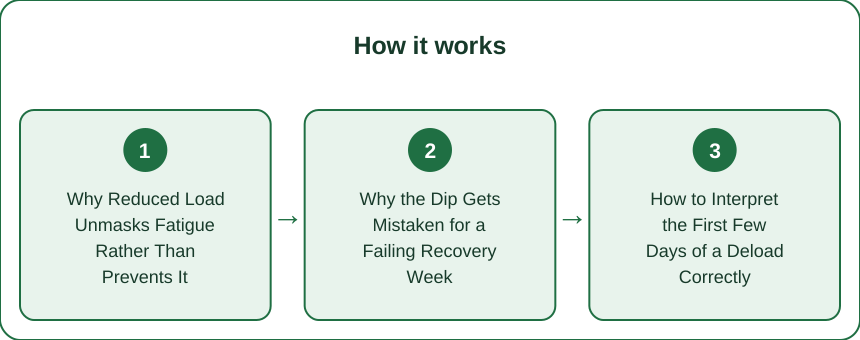
How to Interpret the First Few Days of a Deload Correctly
The framing: expect-a-short-dip-in-the-first-two-to-three-days-of-a-recovery-week-and-judge-the-weeks-success-by-energy-levels-at-the-end-of-it-not-the-start (expecting a short dip specifically in the first two to three days of any recovery week as accumulated fatigue becomes visible, and judging the week’s actual success by energy and readiness levels at the end of it, not by how the first couple of days feel, per the recovery-week-guide logic — expecting-a-short-dip-specifically-in-the-first-two-to-three-days-of-any-recovery-week-as-accumulated-fatigue-becomes-visible-and-judging-the-weeks-actual-success-by-energy-and-readiness-levels-at-the-end-of-it-not-the-start), and the frame (the trajectory across the full week mattering far more than the initial dip does).
The adrenaline, focus, and momentum that accompany hard training sessions partially mask a person’s actual accumulated fatigue level in the moment, and that masking effect disappears almost immediately once training intensity drops for a deload, which is why newly visible fatigue often gets misread as the recovery week itself causing tiredness rather than simply revealing tiredness that was already there. Expecting a short dip specifically in the first two to three days of any recovery week, and judging its actual success by energy levels at the end rather than the start, keeps that normal pattern from being mistaken for a failed deload.
Keep Reading
This article is for general informational purposes only and is not medical advice. Always consult a qualified health professional for guidance specific to you.