The Deload Week: How to Take a Recovery Week Without Losing Fitness or Your Mind
The deload week is training’s most-skipped prescription — the planned easy week that consolidates gains — skipped because training less feels like losing, when the science says it’s how you keep winning. The deload guide: the why, the three formats and the head game.

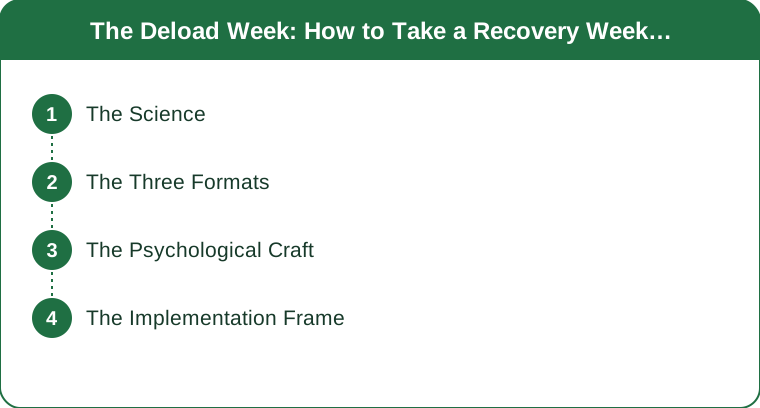
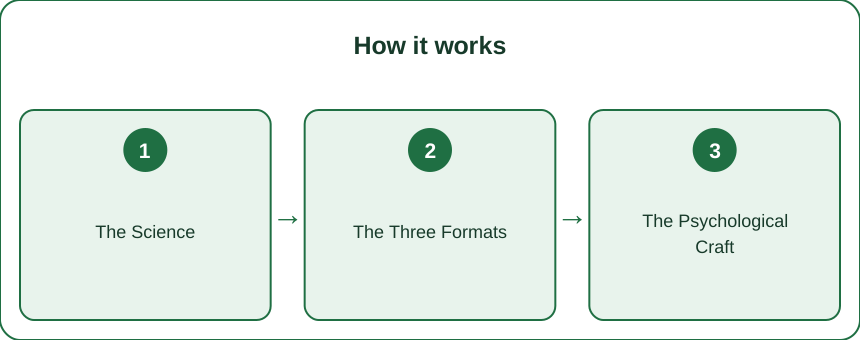
The Science
Why easy weeks build fitness: the fatigue-masking principle (the accumulated fatigue hiding fitness — the tired body testing weaker than it is; the deload dropping fatigue to reveal the fitness underneath, per the overtraining doctrine), the supercompensation logic (the adaptation completing during reduced load — the gains consolidated that continuous stress keeps interrupting; the growth happening in the valley, not the peak), the tissue-repair window (the tendons-and-joints catching up on the muscle’s pace from the tendon doctrine — the niggle-clearing week that prevents the injury week), the hormonal-and-nervous reset (the elevated-stress markers normalizing — the sleep and mood improvements that deload weeks reliably produce), and the evidence-based rhythm (the every-4-to-8-weeks convention — the harder-training and older-athlete ends deloading more often per the masters doctrine; the scheduled deload beating the forced one by injury or burnout).
The Three Formats
Choosing your deload style: format one — the volume deload (the same exercises and intensity at HALF the sets — the classic; the lifter keeping the bar heavy but brief; the groove maintained while fatigue drains), format two — the intensity deload (the loads dropped to 60-70% with normal volume — the technique-polish week; the movement quality investment from the form doctrine; the beginner-friendly format), format three — the activity swap (the structured training replaced by recreation — the hiking, swimming and bike-ride week from the play doctrine; the mental-freshness champion; the format for the burnout-adjacent), the hybrid reality (the mixed weeks — the two light lifting sessions plus recreation; the format matched to what’s most fatigued: the body wanting volume cuts, the mind wanting the swap), and the what-stays-constant list (the sleep, protein and walking held at full dose — the recovery week being ABOUT recovery inputs; the deload of training, never of care per the recovery doctrine).

The Psychological Craft
Training less without spiraling: the loss-aversion honesty (the fitness-loss fear being the skip’s engine — the physiology answer: detraining taking weeks, not days; the one easy week costing nothing and paying interest), the identity management (the athlete-who-recovers identity from the masters doctrine — the deload as professionalism, not weakness; the elite programs all containing them), the restlessness plan (the freed energy given destinations — the meal-prep, the mobility work, the life admin; the deload week’s spare hour spent, not stewed in), the appetite note (the hunger persisting at lower training loads — the fueling held steady; the deload-week under-eating that sabotages the repair it exists for), the data reassurance (the post-deload session that feels SPRINGY — the personal evidence collected once converting skeptics forever; the log entry that ends the debate), and the scheduling commitment (the deload written into the program in advance — the calendar decision beating the in-the-moment negotiation per the pre-commitment doctrine; the week honored like a race date).
The Implementation Frame
Running the week well: the timing triggers (the scheduled every-4-to-8-weeks default PLUS the signal-based calls — the persistent heaviness, sleep changes and stalling from the overtraining doctrine moving the deload up), the week’s shape (the format chosen, the sessions halved or swapped, the extra sleep claimed — the recovery inputs promoted to the program’s main event), the return protocol (the post-deload week re-entered at normal loads, not celebration PRs — the springiness spent wisely per the comeback doctrine), the life-sync bonus (the deload aligned with the brutal work week or travel — the schedule’s demands converted into the program’s rhythm per the flexible doctrine), the seasonal version (the deload month concept for the year — the off-season from the periodization doctrine), and the closing reframe (the deload as the program’s punctuation — the sentence unreadable without the spaces; the training that pauses on purpose outlasting the training that never does; the week off from hard being the hardest discipline, and the best one). Schedule it, pick a format, hold the sleep and protein: the easy week, earned and spent.
Deload every 4-8 weeks: half the sets, or 60-70% loads, or a recreation swap — while sleep and protein stay at full dose. Fatigue masks fitness; the easy week reveals it, and detraining takes weeks, not days.
Keep Reading
This article is for general informational purposes only and is not medical advice. Always consult a qualified health professional for guidance specific to you.